






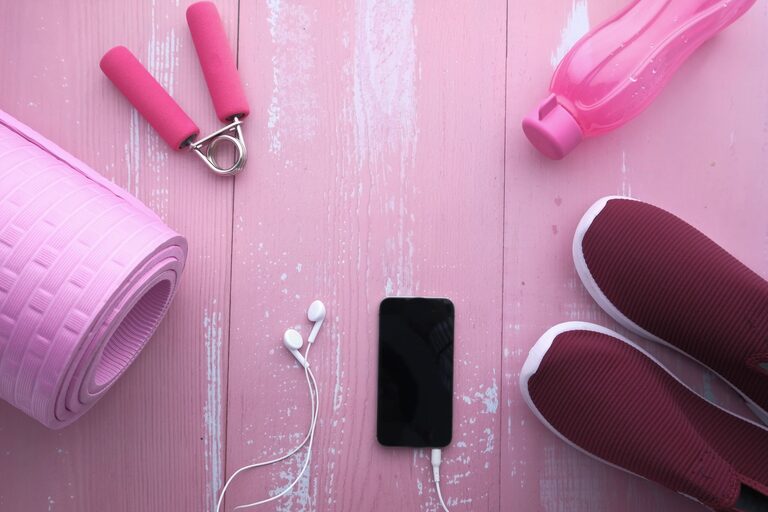
Strength training does not require a gym or expensive equipment. Many common household items can add light resistance to simple movements, helping you create a practical workout at home.
The key is to choose items that are easy to grip, stable, and not too heavy. Start with controlled movements and focus on good form rather than lifting as much as possible. As the exercises become easier, you can add a few repetitions or slightly increase the weight.
Getting Started Safely
Before exercising, clear enough space to move freely. Use a sturdy surface and check that any furniture you use is stable. Avoid items that are cracked, slippery, or difficult to hold.
A short warm-up can prepare you for movement. Try five minutes of easy activity, such as:
– Marching in place
– Arm circles
– Gentle bodyweight squats
– Step touches from side to side
– Easy walking around the room
Choose household items that are comfortable to carry. Good options include filled water bottles, canned goods, backpacks, laundry detergent containers, and books. Hold lighter objects at first, and stop if you feel sharp pain, dizziness, or unusual discomfort.
1. Backpack Squats
A backpack can work as a simple adjustable weight. Place a few books, towels, or bottles inside, then wear the backpack on your back or hold it against your chest.
How to do it
- Stand with your feet about shoulder-width apart.
- Keep your chest lifted and your back in a natural position.
- Bend your knees and lower your hips as if sitting into a chair.
- Lower only as far as you can while keeping control.
- Press through your feet to return to standing.
Try 2–3 sets of 8–12 repetitions. Keep the backpack light enough that you can maintain steady form throughout the set.
This exercise works the muscles in your legs and hips while also challenging your core to help stabilize your body.
2. Water Bottle Shoulder Press
Small water bottles are useful for beginner upper-body exercises. Use two bottles of similar size and fill them only as much as you can comfortably control.
How to do it
- Stand or sit tall with one bottle in each hand.
- Begin with your elbows bent and your hands near shoulder height.
- Press the bottles upward without locking your elbows.
- Pause briefly at the top.
- Lower the bottles slowly to the starting position.
Complete 2–3 sets of 8–12 repetitions. Keep your ribs relaxed and avoid leaning backward as you press.
If this movement feels difficult, use empty bottles or perform the exercise with one arm at a time.
3. Countertop Incline Push-Ups
A sturdy kitchen counter or table can make push-ups easier than floor push-ups. This version strengthens the chest, shoulders, arms, and core.
How to do it
- Place your hands on the edge of a stable counter, slightly wider than your shoulders.
- Walk your feet back until your body forms a straight line.
- Bend your elbows and bring your chest toward the counter.
- Press through your hands to return to the starting position.
- Keep your hips from dropping or lifting too high.
Start with 2 sets of 6–10 repetitions. To make the movement more challenging, use a lower, stable surface. Always test the surface before beginning and avoid counters that slide or tip easily.
4. Canned-Goods Rows
Canned goods can provide light resistance for a back exercise. Use cans that are easy to grip, or substitute small bottles.
How to do it
- Hold one can in each hand.
- Bend your knees slightly and lean forward from your hips.
- Keep your back long and your neck relaxed.
- Pull your elbows back toward your ribs.
- Squeeze your shoulder blades gently, then lower the cans with control.
Perform 2–3 sets of 8–12 repetitions. Avoid rounding your back or using momentum to swing the cans.
If holding two cans makes it hard to stay balanced, use one can at a time and support your free hand on a sturdy chair or countertop.
5. Laundry Detergent Deadlift
A securely closed detergent container can act as a single weight for a beginner hip and leg exercise. Choose a container with a comfortable handle and keep the load light.
How to do it
- Place the container on the floor between your feet.
- Stand with your feet about hip-width apart.
- Bend your knees slightly and push your hips back.
- Grip the handle while keeping your back in a comfortable, neutral position.
- Stand by driving your hips forward, then lower the container slowly.
Try 2 sets of 8–10 repetitions. Keep the container close to your body as you lift. If the container feels awkward or slippery, use a backpack instead.
The goal is to practice a controlled hip-hinge pattern, not to lift a heavy object quickly.
6. Backpack Glute Bridge
A backpack can add light resistance to a floor-based glute bridge. Use little or no weight when learning the movement.
How to do it
- Lie on your back with your knees bent and feet flat on the floor.
- Place a light backpack across your hips and hold it securely.
- Tighten your midsection gently and press through your feet.
- Lift your hips until your body forms a comfortable line from shoulders to knees.
- Pause briefly, then lower your hips slowly.
Complete 2–3 sets of 10–15 repetitions. Keep your feet planted and avoid arching your back to lift higher.
You can also perform the exercise without the backpack and focus on smooth, even movement.
7. Book Plank Pull-Through
A light book can add movement to a plank variation. Choose a book that is easy to slide and not valuable or fragile.
How to do it
- Begin in a high plank with the book just outside one hand.
- Keep your feet slightly wider than usual for balance.
- Use the opposite hand to slide the book underneath your body.
- Place the hand down, then repeat on the other side.
- Keep your hips as steady as possible.
Try 2 sets of 4–8 pulls per side. To make this easier, place your knees on the floor while keeping your body controlled.
Creating a Simple Home Routine
You do not need to perform every exercise in one session. Choose four or five movements that cover different areas of the body:
– Backpack squats
– Countertop incline push-ups
– Canned-goods rows
– Water bottle shoulder presses
– Backpack glute bridges
Perform 2–3 sets of each exercise, resting about 60–90 seconds between sets. Exercise two or three times per week, leaving time between sessions for rest.
Progress gradually by adding one or two repetitions, increasing the weight slightly, or performing an additional set. Change only one part of the workout at a time so you can see how your body responds.
Final Tips for Consistent Progress
Household-item workouts work best when they are simple and repeatable. Keep these guidelines in mind:
– Use slow, controlled movements.
– Breathe naturally instead of holding your breath.
– Stop a set when your form begins to change.
– Keep a note of the exercises and repetitions you complete.
– Test every item for stability before using it.
– Choose lighter resistance when learning a new movement.
With a small amount of space and a few everyday items, you can build a convenient strength routine that fits into your home and schedule. Focus on consistency, practice each movement carefully, and increase the challenge at a comfortable pace.